
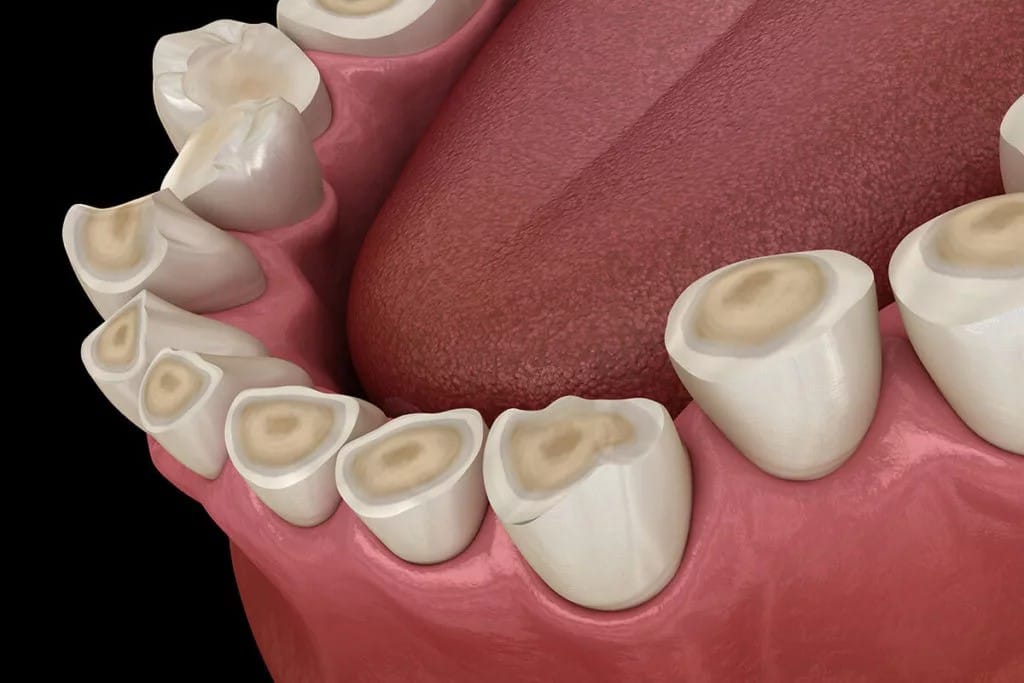
Stress is a major pandemic that affects people of all ages and backgrounds. It is a state of mind in which thousands of people live due to accelerated life and work styles, money issues, political uncertainty, or social situations.
Unfortunately, medicine has seen it be the cause for numerous conditions, and dentistry is not an exception. Over the years, more and more people are affected by night grinding episodes called, in dental terms, bruxism. These can be temporary episodes or chronic conditions that cause severe damage to teeth.
Since these happen during sleep, you are unable to moderate the jaw forces, and therefore, grinding can be very strong and painful. It is actually so much so that you can break a tooth or wake your partner up.
What Are the Signs of Grinding Teeth at Night?
Signs you are grinding:
- You wake up with moderate to severe jaw pain,
- Face, neck, and shoulder pain or swelling,
- Headaches,
- Earaches,
- Excessive or rapid tooth wear,
- Repeated fracture or chipping of natural teeth or crowns,
- Unconscious grinding during the day,
- Increased sensitivity to temperature or chewing.
So, How Can You Stop Grinding Your Teeth at Night?
Your dentist will recommend that you wear a nightguard to minimize damage to the enamel. These guards are better if they are custom-made to ensure a right fit and the ideal material.
However, if the grinding has been left unattended for an extended period of time, damage to teeth could be so severe that it can only be restored with crowns, and even then, they have to be worn in addition to a nightguard at night.
On other occasions, there can be fractures in teeth that can result in an extraction and replacement with either a dental implant or a bridge.
It is therefore important not to ignore the signs of grinding, as they can easily turn into dental problems. It is also important to address the core of the issue.
How to Stop Clenching Jaw at Night?
To reduce nighttime jaw clenching, lower stress with relaxation methods like yoga or meditation, limit caffeine and alcohol, and use a mouthguard for protection.
Gentle jaw massages, warm compresses, and simple stretching exercises before bed can also help relax your muscles and ease clenching.
What Are the Common Causes of Bruxism?
The most common causes for bruxism are
- Stress and anxiety,
- Sleep problems like sleep apnea,
- Certain medications,
- Excessive alcohol or caffeine, smoking,
- Stimulant drug abuse.
Once the main cause is found, you should find ways to turn this around. Implementing relaxation routines or practices during or around nighttime can be a good way to reduce night grinding.
Also, making the sleep environment as dark and quiet as possible and allotting enough sleep time can help. You could also try jaw exercises, such as stretching your jaw muscles repeatedly over the day. If you are experiencing pain, try over-the-counter painkillers.
Inflammation can be addressed with ice packs over the area for 20 or 30 minutes. Finally, visit your dentist frequently in order to assess the damage and take necessary actions in time.
Expert Full-Mouth Rehabilitation for Severe Teeth Grinding
Over the course of more than a decade, the Costa Rica Dental Team has rehabilitated hundreds of cases of extreme or prolonged grinding. We use full zirconium crowns to restore damaged teeth because zirconium is more resistant to strong biting forces and is less prone to chipping.
We will also always recommend getting a nightguard to protect the crown, and at our onsite lab, we can fabricate one custom-made in a day or two.
Are you a grinder? We will be happy to help you. Contact us for more information!